

How do you get an internet connection to a barn if it’s too far away from your house or main buildings?
In a previous blog, we talked about how to use wireless bridges to connect remote farm buildings to the internet.
Here’s another solution: a cellular router.
It’s like a regular Wi-Fi router but instead of using a broadband connection it uses a cell connection — like your smartphone. There are cell routers that use 5G for broadband-speed connections.
How does it work?
Read on!
Get Good Wi-Fi with 5G Routers for Barns
Barns, animal pens, and other buildings are often too far away to get a good internet connection.
It can be way too expensive to run cable out to them. Extending the Wi-Fi network out to the barns is often not practical.
But nowadays smart equipment needs an internet connection. For maximum efficiency, for meeting regulations, for improving your bottom line — you need good internet.
Here’s an idea: a cellular router.
What is a cellular router?
It’s like a Wi-Fi router, but it uses a cell signal for internet connection versus using a broadband cable or satellite dish. You don’t have to worry about infrastructure spend like you do with cable.
If your preferred cell phone carrier offers good coverage where your barn is and the barn is an approved device with the carrier, a cell router for internet at barns is a great option.
Do cellular routers support 5G?
Yes, there are cell routers that support 5G.
5G is important because it gives you much more bandwidth to work with. If you have a lot of devices to connect, having extra bandwidth is a good idea. It’s also a good idea if you want real-time monitoring versus getting periodic updates.
There are cell routers that don’t use 5G. If you don’t need a super-fast internet connection or if 5G coverage is bad in your area, there are cell routers that support 4G LTE.
Most 5G routers can failover to 4G LTE if the 5G signal isn’t good enough, like your smartphone does when you drive around.
A 4G connection is good for many agriculture and husbandry smart sensors and smart monitors. This is particularly true for periodic or passive monitors that need to transmit data but don’t need to do it in real-time.
What about 5G RedCap?
Here’s another thing: keep your eyes open for 5G RedCap routers.
“RedCap” stands for “Reduced Capability.” That makes it sound worse but it’s not worse: it’s optimized.
Smart sensors don’t need bandwidth to stream Netflix in 4K. So 5G RedCap reduces the technical requirements that 5G demands of hardware and connectivity.
You get more efficient and more cost-effective hardware and bandwidth usage. But you still get the other advantages of 5G like network connection efficiency, improved security, and reduced latency.
5G RedCap is still a new technology, however — but it could be a big deal for remote agriculture internet connectivity soon.
Do cell routers work for Wi-Fi?
Yes. A cell router is just like a Wi-Fi router at home.
It makes a Wi-Fi network that your devices connect to. Most of them also have Ethernet ports if you want to connect devices using a cable, which can be more reliable than using Wi-Fi.
You’ll want to make sure that the cell router supports the Wi-Fi band/s you want to use: 2.4 GHz, 5 GHz, and/or 6 GHz.
Just to be clear: your devices connect to the cell router via Wi-Fi or Ethernet cable, and the router connects to the internet using a cell signal. Your devices don’t need to be able to connect to cell themselves — just Wi-Fi or Ethernet.
Can cell routers withstand the cold? The heat?
Yes, there are cell routers that have extended operating temperature ranges that make them suitable for barns that get really cold or really hot.
For example, Teltonika RUT951 works from -40°F to +167°F.
How do 5G routers work?
They work like a smartphone: you use a SIM card or eSIM profile.
There are 5G routers with SIM card slots and 5G routers that work with eSIM profiles, or both.
With a SIM card, you insert the card into a slot just a smartphone. With an eSIM profile, you have to configure it in the router’s user interface.
Some cell routers support multiple SIM cards and/or multiple eSIM profiles.
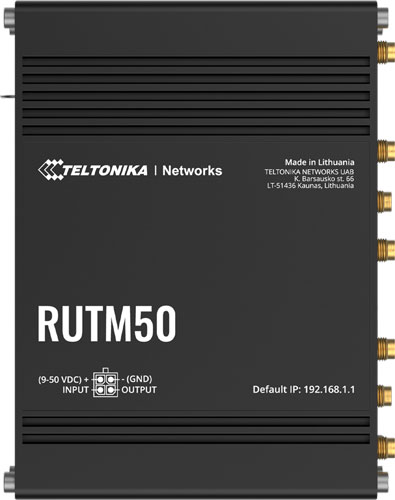
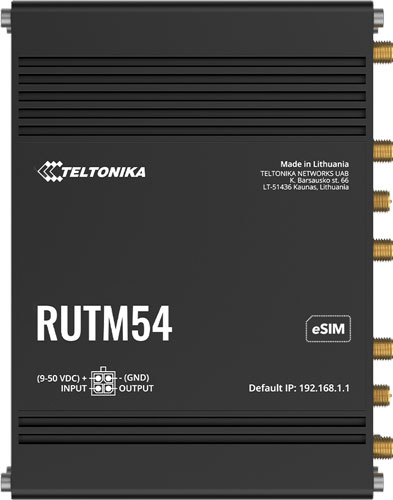
Teltonika Networks, for example, produces cell routers like Teltonika RUTM54, which has 2 SIM card slots and supports up to 7 eSIM profiles at once.
It can failover to another profile if a connection is shaky. That means you don’t need to worry so much.
It’s kind of like creating a permanent hotspot for your barn devices.
What cell plans can I use with a 5G router?
That’s a complicated question, because device/carrier compatibility and plan offerings are dependent on a lot of factors. We don’t want to give you bad advice.
The cell router manufacturers should list carrier approvals in their support material.
And the carriers should list approved devices, too. You might need to look under IoT devices. Here are links for major US carriers (external links):
If you need more help, our friendly network experts are waiting. Just get in touch!