


In the tech world, there are two schools of thought when it comes to using single-vender vs multi-vendor systems. Each has its advantages.
Single-vender systems mean all the devices are completely compatible, making them, in theory, simpler to connect and manage. Everything just works. Simplicity, however, comes at the expense of flexibility. Lock-in.
Multi-vender systems offer more choice, which enables you to shop around, be more flexible, find specific solutions for specific scenarios, and so on. Freedom is, in theory, the primary advantage, but that freedom comes at expense of difficulty: setting up and managing multi-vender systems is often more challenging.
What if you could get the best of both worlds? What if you could have the simplicity of single-vender systems with the freedom of multi-vender systems?
In a previous blog, we covered Open SIP and what it means for your VoIP phones. An industry standard that lets a phone from one vender just work with a platform from another vender? Interoperability is great.
In the world of IP surveillance and access control, the interoperability specifications are known as ONVIF profiles.
In this blog, we provide an overview of what ONVIF means, what the different ONVIF profiles cover, and what the advantages of ONVIF conformant products are.
Let’s get into it!
What Does ONVIF Mean?
ONVIF is an organization: the Open Network Video Interface Forum. It was founded by Axis, Bosch, and Sony in 2008. There are now over 500 member companies.
When you see an ONVIF profile listed in a product write-up or on a datasheet, it refers to one of the standardized profiles that this organization has produced in a series of specifications. Version 1.0 was released in November 2008. The latest specification as of the writing of this blog — Version 25.12 — was released in December 2025.
The goal of ONVIF is to ensure the interoperability of certain important features or functions between IP surveillance and access control products from different companies.
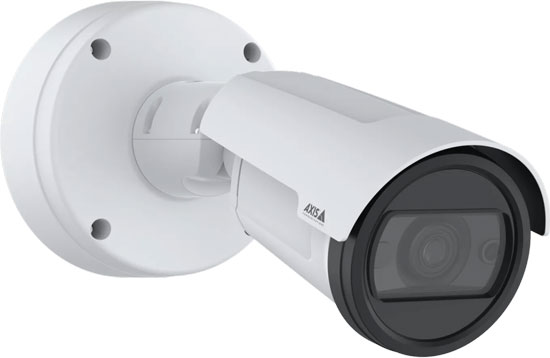
Both devices like IP cameras and clients like video management software (VMS) can be ONVIF conformant. A product is conformant if it is produced by an ONVIF member and is tested to follow at least one of the profiles. It can follow any number of them, but it must follow at least one.
Conformant products are also able to communicate with each other. For example, an ONVIF conformant IP intercom can integrate with an ONVIF conformant IP camera if the client that connects them is conformant with the requisite ONVIF profiles.
ONVIF features can be mandatory, conditional, or optional. Mandatory means every product that is conformant with the profile must support the feature. Conditional means every product that can support the feature must support it to be conformant; however, the product can still be conformant if it can’t support the conditional feature. Optional means the product is not required to support the feature to be conformant.
To find out if a product is officially ONVIF conformant, visit the Conformant Products page on the ONVIF website (external link).
Each ONVIF profile covers a specific type of interoperability. There are currently seven ONVIF profiles. The brief descriptions in this list are ONVIF’s own phrasings; we cover each profile in more detail below.
- ONVIF Profile A for access control configuration
- ONVIF Profile C for door control and event management
- ONVIF Profile D for access control peripherals
- ONVIF Profile G for edge storage and retrieval
- ONVIF Profile M for metadata and events for analytics applications
- ONVIF Profile S for basic streaming video
- ONVIF Profile T for advanced video streaming
There was an ONVIF Profile Q, but that specification was removed in March 2022.
What Is ONVIF Profile A?
ONVIF Profile A specifies important access management features: granting and revoking credentials, creating schedules, and assigning access rules. This profile applies to IP access control devices. It was first released in July 2017.
Access control systems have tended to be proprietary in nature, making interoperability challenging if not impossible. They also tend to have long lifecycles, which means they are slow to be upgraded.
Because ONVIF profiles enable interoperability, they let you upgrade components in the system as needed without worrying about proprietary solutions: futureproofing the system by giving you choice.
What Is ONVIF Profile C?
ONVIF Profile C also applies to IP access control devices. It specifies door control and event management features, including site information and configuration, alarm management, and door access control. It was first released in December 2013.
When components of a physical access control system are ONVIF conformant, they provide up-to-date information about their status and support basic door control.
What Is ONVIF Profile D?
ONVIF Profile D is the third of the three profiles dedicated to access control. It specifies credential identifier interoperability for a range of access control peripherals and functions. It was first released in June 2021.
Token readers like RFID readers are covered, as are biometric readers like fingerprint scanners. IP cameras that are used for automatic ID purposes like facial recognition or license plate recognition are covered. Keypads and locks and displays are covered. Even temperature or motion sensors are covered.
Profile D enables the secure transmission of credential identifiers, as well as, on the client side, the configuration of these credentials.
It is, unfortunately, fair to say that the access control profiles — A, C, and D — have not been as widely adopted as the other profiles. Popular access control manufacturers like Viking Electronics and Grandstream have yet to adopt these profiles; even a manufacturer like 2N, who produce IP intercoms that are compliant with other profiles like S and T, haven’t adopted these access profiles.
The good news is that these profiles are relatively new. As we said earlier, access control systems are slow to change. Hopefully over time, ONVIF access control solutions will become more available and used.
What Is ONVIF Profile G?
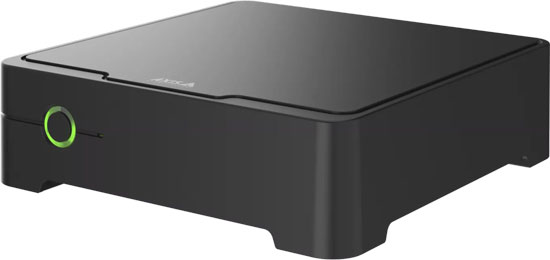
ONVIF Profile G applies to IP video security systems. It specifies recording and streaming video from a device like an IP camera or video encoder to a client like a network video recorder (NVR). It also covers local recording video on a device. It was first released in June 2014.
An ONVIF Profile G client can configure devices, search through video, replay video, and more. The profile establishes standards for video search filters, time and event classifications, and more. It also covers receiving audio and metadata information if the client supports these features.
If you’d like to know more about recording and streaming video from IP cameras, we recently wrote an in-depth series on the topic in three parts:
What Is ONVIF Profile M?
ONVIF Profile M covers the handling of a wide range of metadata and events for use by analytics applications. It was first released in June 2021.
In this case, analytics applications provide actionable insights and event triggers by intelligently interpreting information from IP cameras. Profile M specifies how to classify objects like vehicles or humans and related functions like heat mapping, geolocating, video searching, and more.
IP video analytics only works if the video and metadata is properly classified and organized. And if that information is standardized, it means you have access to analytics solutions across companies — a big win.
What Is ONVIF Profile S?
ONVIF Profile S is the first profile to be specified. It was first released in January 2012. (Other ONVIF specifications were released prior to Profile S, but Profile S is the first to get the profile name.)
It’s fitting that Profile S was the first. It specifies basic video streaming and configuration. If you have IP cameras, you need them to stream video, right? That’s the whole point.
On top of video, it also specifies basic camera functions like PTZ control, one-way audio streaming from device to client, and more.
What Is ONVIF Profile T?
ONVIF Profile T builds on Profile S to specify advanced video features. It was first released September 2017.
It covers a whole host of useful functions. For example, it covers H.265 (also known as HEVC) video compression, which can greatly reduce bandwidth and storage usage. It covers two-way audio vs Profile S, which only covers one-way audio. It covers secure HTTPS video streaming and alarm events like motion or tampering detection.
If the ONVIF conformant camera supports Profile S and Profile T, you know you’re getting a security camera that will produce professional-grade video.
What Are the Limitations of ONVIF?
We’ve talked up ONVIF quite a bit to this point. It’s only fair to point out the limitations. There are currently two limitations worth noting:
- Adoption
- Advanced features
Interoperability standards only work when manufacturers adopt them. ONVIF conformant products are common, but they do not completely saturate the market. While ONVIF profiles relating to IP security video is concerned are widely adopted, the profiles relating to IP access control are less so.
Hopefully over time, more and more IP products will adopt interoperability. According to a 2024 press release by ONVIF (external link), the number of ONVIF conformant products tripled from 2018 to 2024.
Generative AI and the challenges it poses to the reliability of video evidence might lead more companies to follow objective industry standards in order to prove the reality of their video evidence.
The other limitation is that advanced features are not covered by ONVIF profiles. While ONVIF profiles cover a large portion of the functionality of IP cameras and access control devices, they are not intended to cover every possible feature.
Devices and clients might support desirable features that are only available if you use a single-party system. This limitation is going to persist, because of the nature of technological innovation.