


IP intercoms upgrade the classic, reliable analog intercom with easier scalability and management, enhanced audio/video performance, smartphone app integration, and much more. They’re computers: the equivalent of a smartphone vs your trusty old Western Electric Model 500 telephone.
Can outdoor IP intercoms be as robust as their analog predecessors? Outdoor intercoms face some of the most challenging conditions of any tech.
Yes. Outdoor IP intercoms have a wide range of construction features that make them weather resistant.
In this blog, we explore what weather resistant really means for IP intercoms.
Let’s get into it!
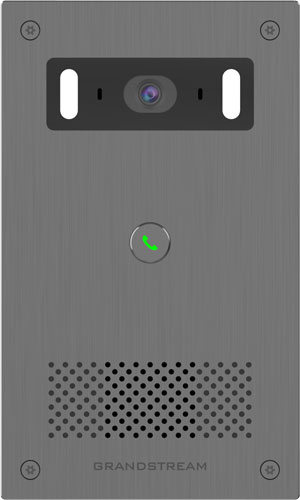
Weather Resistant IP Intercoms
“Weather resistant” is a catch-all term for resistance to a wide range of environmental challenges. Let’s take them one at a time, focusing on how the intercom is constructed. Afterwards, we’ll discuss a couple other factors to do with weather resistance: external protectors like rain guards and flush-mounting vs surface-mounting.
Precipitation: Water can be incredibly damaging to electronics. Rain, snow, hail, graupel — they’re all big threats to outdoor IP intercoms. The primary defense against precipitation is the trusty old gasket: a soft, impermeable material that fills the space between two or more surfaces. The internal electronics might be sealed or potted. “Potted” means the filling or covering an electronic assembly in a material like a silicone rubber gel to protect it from moisture and other damaging agents.
IP Ratings, which you’ve probably seen, denote a device’s water-resistance. Let’s take IP67. The first 6 refers to dust resistance (more on that in a bit) and the 7 to water resistance. The highest level of water resistance for IP ratings is 9.
Condensation: Water need not only fall from the sky. Especially in humid locations, condensation is a constant threat. What’s especially pernicious about condensation is that happens inside the device regardless of any exterior protection. If condensation is a worry, look for potted electronics. Many intercoms also have drainage holes or passages to allow for airflow to reduce condensation and promote evaporation.
Temperature: Extreme temperatures are difficult for anything to deal with, let along electronics. Changes in temperature can also be damaging. Ever wonder why sidewalks are made with cracks? It’s to allow the concrete to expand and contract from heat and cold without breaking. There’s a wide range of construction methods to combat temperature challenges, including heat sinks and cold-resistant material choices.
The datasheet of an intercom will specify the operating temperature range within which the intercom has been tested for reliable operation. Some manufacturers specify a safe start-up temperature; if the power goes out and the intercom shuts off in extreme cold, turning it back on when it is cold can severely damage the electronics. They might also specify a maximum temperature at which the intercom can operate for a short period of time but not continuously.
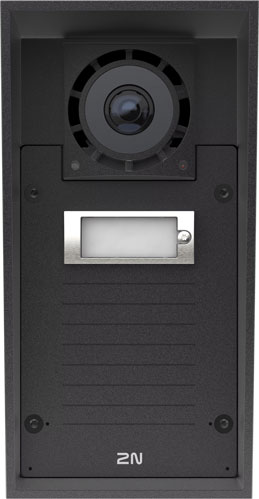
Sunlight: Continual sunshine can damage materials, especially plastic. The energy from ultraviolet radiation is absorbed by the material and breaks covalent bonds, resulting in bleached and brittle materials. Ever wonder why art galleries are so strict about camera flashes? It’s the same issue: energy from the light damages paint and other media. Outdoor-ready intercoms use UV-stable plastics or light-resistant materials like stainless steel to combat sunlight. If the intercom is in a particularly sunny location much of like the Southwest, you should get a sun guard to protect it from damage.
Debris: Physical particles like dust and sand can get inside the intercom and cause all sorts of havoc. Besides gapless construction and gaskets, you might find screens under speaker grilles or similar construction features to protect against dust.
As we mentioned above, IP Ratings denote resistance to dust and water ingress. Take IP67: the 6 refers to its dust resistance. 6 is the highest number and denotes dust-tight construction. If you’re installing an outdoor IP intercom on the Great Plains, make sure to find one with a 6 in that first spot.
Wind: It doesn’t need to be a tornado. Beyond the debris wind can whip against an intercom, the vibrations and impacts caused by constant wind can be damaging to electronics.
IK Ratings denote impact resistance to kinetic energy measured in joules; in other words, how strong of a blow can a device take. Unlike IP Ratings, with which the numbers refer to two different features — dust resistance and water resistance — with IK Ratings, the number refers just to one thing: impact resistance. IK numbers go up to 11 officially; any IK Rating you see beyond IK11 is marketing.
You’ll often see IK Ratings used in reference to vandals: “Vandal-Resistant IK10-Rated Intercom” or something like that. The rating doesn’t refer to vandals prying open the intercom or anything like that: just them hitting it. For resistance to prying or similar physical tampering, you’ll need to look for Torx security screws, ligature-resistant design, and similar features.
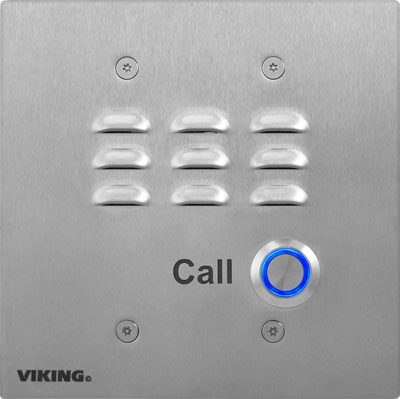
Altitude: Some manufacturers will specify a maximum altitude of operation. High altitudes can affect performance. The atmosphere thins as you get higher, and a thinner atmosphere can lead to less efficient heat dissipation.
Traffic: The vibrations and particulate matter produced by traffic are just as damaging as anything Mother Nature throws at your intercom. Exhaust can be extremely corrosive, because it is acidic.
Salt: If you live near the ocean, you know that the corrosive nature of salt is the worst for all electronics. Be aware: resistance to corrosion from salt is not implied by a general “outdoor-ready” label. If salt-resistance is a feature you require, make sure the manufacturer clearly specifies it.
When it comes to exhaust and salt, there’s one other common standard you should be aware of: NEMA Type. NEMA Types refer to the characteristics of enclosures for electronic equipment. NEMA 4 specifies a watertight enclosure, and NEMA 4X a watertight enclosure with additional corrosion resistance. When it comes to IP intercoms, of all the thirteen NEMA Types, you’ll encounter NEMA 4X the most often; that’s what it means.
For a more detailed description of what IP, IK, and NEMA ratings mean, check out our blog: VoIP Phones for Harsh Environments.
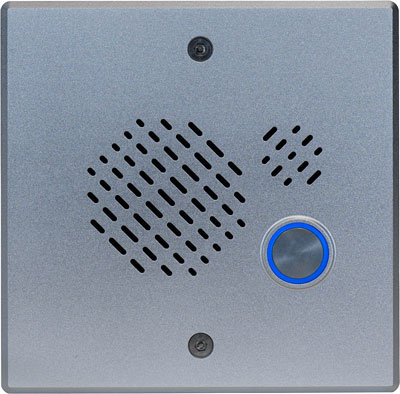
There are ways to improve weather resistance beyond the construction of the intercom itself.
Rain guards and sun guards are the simplest solution. If you can’t mount the intercom under a ledge or other cover, look for a guard. Most manufacturers produce intercom weather guards that fit the device perfectly; sometimes the weather guard is integrated with the intercom’s flush-mount or surface-mount box, and most of the time it will need to be purchased separately.
To finish, we wanted to touch on flush-mounting vs surface-mounting IP intercoms. Is one better for weather protection than the other?
Flush-mounting means the intercom is installed inside a wall or other surface with the face of the intercom being flush with the wall; surface-mounting means the intercom is installed on the surface of a wall in a box.
The answer is: neither is necessarily better. But both can be perfectly good, too.
While it might seem that flush-mounting would be the better option because less of the intercom is exposed, there are other factors to consider.
For example, surfaces are often uneven — think stucco or pebbledashed walls. A flush-mounted faceplate will leave gaps along this rough surface where water will be able to enter unless you use silicone caulking or something similar. Another example: the wall that the flush-mount box is installed in might be water-permeable, in which case water could accumulate in the intercom box without you seeing it.
Surface-mount boxes for outdoor intercoms are purpose-built for weather resistance, and they allow easier access to the electronics and cabling in case you need to repair or replace parts over time.
In other words, it’s the whole installation that matters, from choosing official, purpose-built mounting accessories to cable routing to proper installation.